Posts

Showing posts with the label cheng man ching

Continuing the theme of teaching...

Image
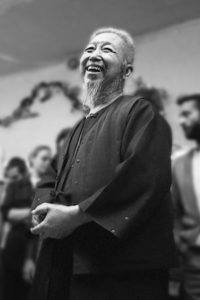
Continuing the theme of teaching - and non-Taiji posts - I came across this in something that I'm currently reading. "Being a coach is not about swagger or bravado. It's not just about how well you can play or the knowledge and information you have accrued, it's about how you communicate it to your player and tailor it to their needs. And it's about your passion, commitment and emotional resilience."  While the (martial) skill of many past Taiji greats is often discussed it's less apparent how well they conveyed their skills to the next generation and in some cases (notably Yang Shaohou) they were clearly not sympathetic teachers. [Image: Cheng Man-ching and ???]

What do you do outside of your Taiji practice

Image
 What do you do outside of your Taiji practice? Does your practice extend into these activities and/or vice versa? A couple of chance encounters over the last few months have highlighted the non-Taiji aspects of well known Taiji practitioners. It was well known that Cheng Man-ching was regarded as 'Master of Five Excellences' - and some extend this to seven - including calligraphy, painting, medicine, poetry, and philosophy. But did you know that Ken Van Sickle, one of Cheng's early students, is an accomplished photographer, the Wall Street Times running a piece on him earlier this month: https://www.nytimes.com/2019/01/03/lens/ken-van-sickle-photos-bohemian.html Ed Young, also an early student of Cheng's, is an award-winning children's author and illustrator. Just two examples but I'd be surprised if there weren't more out there. Is there scope for such creativity within Taiji practice or does the repetition, focus, and precision of practice stimulate other...

One must distinguish the teacher from the taught.

Image
 "One must distinguish the teacher from the taught. ...And the fact that some of Zheng's students do postures one way does not mean Zheng taught them that way. Isn't it just possible that Zheng's teachings involved no changes, but instead simply reflects that he was superb at not changing Yang's system, teaching it as he had learned it? Zheng stressed accuracy first and last. When he learned the rudiments under Yang, he had to master each posture before moving to the next, there was no breezy form class followed by a corrections class. With time, his own form became less energetic and more internalized - compare his 1960 Taiwan film with his 1973 film - but his teaching remained pretty much the same." 'Zheng Manqing and Taijiquan: A Clarification of Role' by Robert W. Smith, Journal of Asian Martial Arts, Vol. 4 No. 1 (1995). [Image: Cheng Man-ching]

The application of chi and energy (chin) in T’ai-chi ch’uan is slow and continuous...

Image
 “The application of chi and energy (chin) in T’ai-chi ch’uan is slow and continuous, cyclical and repetitious, circular and interconnected. It is inexhaustible." “While its surface is expansive, its center is cohesive, and therefore it does not lose its roundness.” “It takes roundness as a model, but it is not really a sphere. Its defense is based on the principle of roundness; its offense is to be everywhere triangles.” Cheng Man-ch'ing 'Master Cheng’s Thirteen Chapters On T’ai Chi Ch’uan', ch.7

The waist is the foundation of all bodily movement.

Image
 “The waist is the foundation of all bodily movement. It is the big axis from which all T’ai-chi movements derive their celerity, crispness, and power. Only in the flexibility of the waist is there true strength. To fight with arms or legs independently of the waist is the mark of the perpetual beginner.” Robert W. Smith ‘Chinese Boxing: Masters and Methods’, p.27

...it is that the surest test of the efficacy of any of the many systems of T'ai-chi...

Image
 "...it is that the surest test of the efficacy of any of the many systems of T'ai-chi practised today is simply to examine the postures from the standpoint of use: if they cannot be related to practical application, the system is clearly incorrect.” Cheng Man-ch’ing & Robert W. Smith ‘T’ai-chi: The “supreme ultimate” exercise for health, sport, and self-defense’ p.90

When the body is emptied of force...

Image
 “When the body is emptied of force - that is, when all the muscles are relaxed - a 'tenacious strength' will develop from the foot. This tenacious strength is different from force in that it has a root, whereas force does not. In action, tenacity may be likened to a strong vine which is pliable, and force to a stick which is rigid. Tenacity is alive, force is inert.” Cheng Man-ch’ing & Robert W. Smith ‘T’ai-chi: The “supreme ultimate” exercise for health, sport, and self-defense’

The motto for T'ai-chi practice must be “investment in loss.”

Image
 “The motto for T'ai-chi practice must be “investment in loss.” It is what Confucius meant by k’e chi - to subdue the self. How is this manifested in mundane affairs? It means to yield to others, thus quashing obstinacy, egotism, and selfishness.” Cheng Man-ch’ing & Robert W. Smith ‘T’ai-chi: The “supreme ultimate” exercise for health, sport, and self-defense” p.2

On Peng / 掤

Image
 On Peng / 掤: "What is the meaning of 'Ward Off' energy? It is like the water supporting a moving boat. First one must sink ch'i to the tan t'ien then one must hold the head as if suspended from above. The entire body is full of springlike energy, opening and closing in a very quick moment. Even if there is an opposing force of one thousand pounds, One can uproot the opponent and make him float without difficulty." T. T. Liang 'Tai Chi Ch'uan for Health and Self-Defense' p.77

Thus there is good reason for calling this art the “Great Ultimate.”

Image
“Thus there is good reason for calling this art the “Great Ultimate.” … it strengthens the weak, raises the sick, invigorates the debilitated, and encourages the timid.” Master Cheng’s Thirteen Chapters On T’ai Chi Ch’uan, ch.1  “It takes roundness as a model, but it is not really a sphere. Its defense based on the principle of roundness; its offense is to be everywhere triangles.” “While its surface is expansive, its center is cohesive, and therefore it does not lose its roundness.” “The application of chi and energy (chin) in T’ai-chi ch’uan is slow and continuous, cyclical and repetitious, circular and interconnected. It is inexhaustible." Master Cheng’s Thirteen Chapters On T’ai Chi Ch’uan, ch.7